How I Photograph the Same City Buildings Without Getting Bored
I keep a clipboard in the truck, even though half the time I do not really need it anymore. Old habit. It has a laminated checklist clipped to the front with the same buildings listed in the same order. City Hall, the water treatment annex, the rec center, the three libraries, the maintenance garage. I have photographed them all so many times that I could probably walk the route with my eyes closed and still know when to stop and where to stand.
My job title is municipal facilities documentation coordinator, which sounds more important than it feels most days. What it means is that I am responsible for keeping a photo record of every city owned building. Roof lines, entrances, windows, stairwells, utility access points. The photos are not for beauty. They are for records, insurance, inspections, and arguments that might happen years later when someone says a crack was not there before.
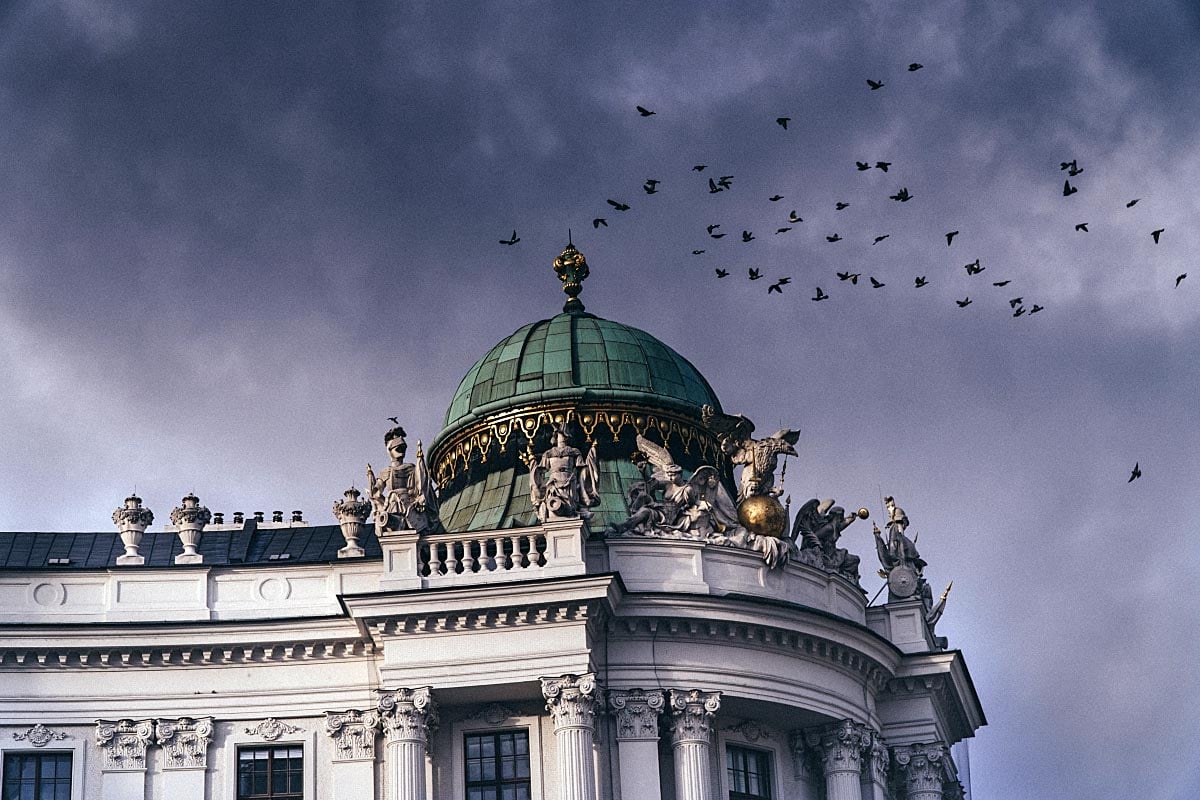
So I take the same photos the same way every time. Same distance. Same height. Same lens. If the sun is in the wrong place, I wait. If a truck is parked in front, I come back later. The goal is consistency. Creativity is not just unnecessary, it is actually a problem. A creative angle makes it harder to compare images from year to year. I learned that early on, after a supervisor asked why one doorway suddenly looked smaller.
Most days I am fine with that. It is a job. I like knowing what is expected. I like that no one is surprised by my work. I upload the files, label them, and move on.
But I am also a photographer. That part of me does not shut off just because I am on the clock.
It usually starts happening near the end of the day, when the checklist is almost done and the light is starting to change. I will take the last required shot, the one that matches the previous twenty versions perfectly, and then I will pause. The camera is still in my hands. The building is still there. Nothing says I have to put it away immediately.
Sometimes I step a little to the left. Sometimes I crouch. Sometimes I walk across the street and look back instead of standing right up against the sidewalk. I do not keep those photos. Not for work. They go into a different folder on my own drive, one that has nothing to do with the city.
At first I thought this was just me messing around, killing time. But it kept happening. The maintenance garage at dusk, with its metal siding catching the last bit of orange light. The library early in the morning after a snow, when the front steps were still untouched. City Hall reflected in the windows of a parked car, bent and broken in a way that made it feel temporary instead of permanent.
That was when I realized I was collecting my own photography ideas without really meaning to.
I do not think I would have called it that back then. It felt more like sneaking dessert after dinner. Something small that was just for me. But the more I did it, the more I noticed how different my attention became when I was not bound by the checklist. I started seeing lines instead of features. Shadows instead of surfaces. Timing instead of documentation.
The funny part is that the buildings never changed. They were the same brick boxes and concrete slabs I dealt with every week. What changed was the permission I gave myself once the official work was done.
After I started going back on my own time, the buildings stopped feeling finished to me. During work hours, each one has a clear endpoint. You get the required angles, confirm the file names, and you are done. Outside of work, there is no signal that says you have captured everything that matters. I might walk around the same structure three or four times, not even shooting, just watching how people move through it and where the light seems to hesitate.
There is a fire station I have documented for years. From the city side, it is one of the simplest jobs I have. Flat facade, wide driveway, nothing blocking the view. I can finish it in under ten minutes. On my own time, it turns into something else. The doors reflect the sky differently depending on the season. The brick looks darker after rain. The flag out front never hangs the same way twice. None of that shows up in the official record, but all of it feels worth paying attention to.
I started keeping a small notebook in the truck, separate from the clipboard. It is not organized. It does not have dates. I just jot down things I notice when I cannot shoot or when an idea hits me too late. Long shadows from the bike rack at the library. Steam drifting from a vent behind the water building in winter. The way the rec center looks taller if you stand near the fence instead of the sidewalk. I do not always remember why I wrote something down, but later it usually makes sense.
What surprised me most was how limited my thinking had been when I only shot buildings for work. I thought I knew them. I was wrong. I knew how to record them, not how to explore them. Once I let go of matching old photos, I started making small rules for myself instead. Shoot only reflections. Shoot only from across the street. Shoot only when something is partially blocking the view. Those little limits gave me more room than the official process ever did.
Some weekends I drive out with a plan and abandon it halfway through. I will tell myself I am going to focus on entrances, then end up spending an hour on stairwells instead. Other days I stick stubbornly to the idea even when it feels flat. I have learned not to force a good result. If I come home with nothing I like, that is still part of the process. The job taught me discipline. The rest is teaching me patience.
I also started paying attention to how time changes the same space. Not just morning versus evening, but small shifts. Ten minutes before sunset versus ten minutes after. Right before a storm instead of right after. I used to avoid bad weather completely. Now I check the forecast on purpose. Rain streaks on concrete tell a different story than dry walls ever could. Snow simplifies everything in a way that feels honest.
There are days when I cannot come up with anything on my own, and that is when I look elsewhere again. I do not stay there long. I skim. I save a few notes. I am not trying to copy anyone. I am just trying to shake loose whatever is stuck. Seeing how other people approach structures helps me reset. It reminds me that there are always more photography ideas than I think, even when my head feels empty.
What I like about working with buildings is that they do not rush you. They stay put. If you miss something, it will probably still be there tomorrow. That takes pressure off in a way people photography never has for me. I do not worry about expressions or reactions. I worry about angles, spacing, and how the frame holds together. It feels quieter, even when the street is loud.
Sometimes coworkers ask why I am still around after an inspection should be finished. I usually say I am double checking something. That is not a lie, exactly. I am checking my own attention. If I feel myself slipping back into autopilot, I pack it in for the day. If I feel alert, I stay a little longer and see what happens.
The strange thing is that the more I do this outside of work, the less bored I feel during work itself. The checklist does not change, but my mindset does. I still shoot the same angles, but I notice details I used to ignore. Even if the final image looks identical to last year’s, the act of taking it feels different.
I used to think creativity required new locations or dramatic subjects. Now I am not so sure. The buildings I photograph for the city have given me more material than I expected. They just required me to show up without a form in my hand and give myself permission to look longer than necessary.
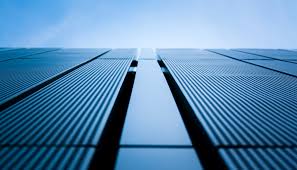
There is a stretch of buildings along the east side of town that I avoided for a long time once work hours were over. They are plain. Low. Functional in a way that feels almost defensive. From the city’s perspective, they exist to house equipment and people, not to be admired. I used to think there was nothing there for me either. That turned out to be another lazy assumption.
One afternoon I went back with no plan at all. I parked farther away than usual and walked the length of the block instead of starting where I always did. That alone changed things. The buildings lined up differently when I approached them from the side. Gaps between structures became more interesting than the walls themselves. I noticed how utility pipes and vents created their own rhythm, repeating and then breaking in small ways.
I took fewer photos that day, but I spent more time on each one. I would raise the camera, lower it, wait, then raise it again. I started thinking less about what the building was and more about how it occupied space. Where it pressed forward. Where it retreated. The images were quieter than what I usually kept, but they felt intentional.
That day changed how I think about location. I used to believe that if I had already shot a place, there was nothing left to find. Now I know that was just impatience. Returning to the same site with a different constraint makes it new again. Even small changes matter. Standing instead of crouching. Shooting parallel instead of angled. Waiting for a cloud to pass. None of it is dramatic on its own, but together it adds up.
I have also learned to stop chasing what I think a good photo should look like. When I first started shooting buildings outside of work, I was still trying to impress an imaginary audience. I wanted strong lines, bold contrast, something obvious. That mindset made me miss quieter moments that actually suited the spaces better. Letting go of that expectation took time.
Some evenings I focus only on surfaces. Brick, glass, concrete, metal. I frame tightly and ignore the building as a whole. Other times I do the opposite and step back until the structure almost disappears into its surroundings. Cars pass through the frame. Trees cut across it. People show up as partial figures. The building becomes a backdrop instead of the subject, and that feels honest too.
I still struggle with running out of ideas. That has not gone away. There are weeks when everything feels stale and repetitive, no matter how many times I circle the block. That is usually when I stop shooting and just observe. I remind myself that photography ideas do not always arrive on schedule. Sometimes they show up later, when I am not trying to force them.
One thing that helps is changing how long I stay in one place. Instead of bouncing from site to site, I will pick a single building and commit to it for an hour. I do not rush. I let the scene change around me. Light shifts. Foot traffic comes and goes. The building stays, but the context does not. That contrast gives me more to work with than I expect.
There is also value in paying attention to mistakes. Blown highlights. Crooked lines. A reflection that overwhelms the frame. I used to delete those immediately. Now I study them. Sometimes the problem points to something I would not have tried on purpose. Not every mistake leads somewhere useful, but some of my favorite images started as accidents.
The longer I do this, the more I understand that my job trained me well, even if it did not feel creative at the time. The discipline, the consistency, the patience. All of that supports the work I care about now. I still document buildings for the city, but I also document my own curiosity, one frame at a time.
I no longer worry about whether a session produces something worth sharing. If I come away with a better understanding of a place I thought I knew, that is enough. The camera is just a way to slow down and pay attention, even when the subject seems familiar.
I have learned that part of the struggle comes from carrying my work mindset into my personal shooting without realizing it. At work, every photo has a purpose that lives outside the image itself. It has to answer a future question or support a future decision. When I am on my own time, that pressure does not belong there, but habits are hard to shake.
There was a stretch where I kept judging my own photos as if someone else were going to review them. I would look at the screen and immediately start thinking about what was missing or what could be questioned later. That kind of thinking drains the fun out of it fast. Once I noticed I was doing that, I had to actively stop. I started asking a different question instead. Did I stay curious long enough to see something new?
One thing that helped was limiting how much I reviewed images in the moment. I stopped checking the screen after every shot. I let myself shoot a short sequence and then move on. Reviewing later, away from the building and the noise of the street, changed how I reacted to the images. I was calmer. Less critical. More open to what they actually showed instead of what I expected them to be.
I also began to notice patterns in what I am drawn to when I am not following the checklist. Certain types of corners. Repeating shapes that almost line up but never quite do. Reflections that distort edges just enough to make the structure feel unstable. Once I saw those patterns, I leaned into them instead of fighting them.
There is a parking structure downtown that I have photographed dozens of times for work. It is purely functional. Ramps, railings, concrete. On a quiet Sunday afternoon, I walked it slowly from top to bottom. No car traffic. No pressure to hurry. The shadows created by the railings changed every few minutes. I stood in the same spot and shot until they moved out of the frame entirely.
That experience reminded me that movement does not always come from the subject. Sometimes it comes from the light or from me. Staying still can be just as productive as walking around, which is not something my job ever taught me. At work, stillness means you are done. Outside of work, stillness can mean you are paying attention.
When I do feel stuck, I sometimes go looking for photography ideas with a very specific goal in mind. Not inspiration in a broad sense, but a single prompt I can try immediately. Something concrete. Something small. I have learned that vague motivation does not help me. Action does.
I am careful not to let outside suggestions take over completely. If I follow someone else’s approach too closely, the images stop feeling like mine. I treat photography ideas like tools rather than instructions. I pick one up, try it, and set it down when it stops being useful. That keeps my work from drifting too far from my own way of seeing.
Another shift has been allowing myself to leave without a clear ending. At work, everything has a finish line. On my own time, I sometimes stop simply because I feel done, even if I cannot explain why. That lack of closure used to bother me. Now it feels natural. Not every session needs to wrap itself up neatly.
I still have days where nothing clicks. The buildings feel flat. The light refuses to cooperate. My attention wanders. On those days, I put the camera away sooner than I used to. Forcing myself to keep shooting rarely leads anywhere good. Walking away is not quitting. It is part of the rhythm.
The longer I stay with this, the clearer it becomes that my relationship with buildings has changed. They are no longer just items on a list. They are familiar places that still manage to surprise me when I give them time. That is enough to keep me coming back, even when I think I have seen it all.
By the time I started thinking about all this more clearly, photographing buildings had stopped feeling like a side activity. It had become the thing I looked forward to most once the workday ended. That surprised me. I had always assumed passion came from variety, not repetition. But repetition, it turns out, can be a teacher if you let it.
There is a sense of familiarity that settles in when you return to the same structures over and over. I know which sidewalks are uneven. I know where the security lights click on first. I know which doors creak and which ones never seem to open at all. Those details are not dramatic, but they add weight to the experience of being there. They make the buildings feel occupied, even when no one is around.
I have also become more aware of how my own mood changes what I see. On days when I am tired, I notice flatness first. On days when I am alert, I notice relationships between shapes. That awareness has helped me be more honest about when to shoot and when to wait. Not every evening needs to turn into a photo session.
Sometimes I drive out with the camera and never take it out of the bag. I sit in the truck for a few minutes, look around, and realize I am not present enough to do anything useful. That is fine. I did not waste time. I learned something about where my attention was that day.
I have also stopped chasing novelty for its own sake. Early on, I felt pressure to constantly do something different, as if repeating myself meant failure. Now I am less concerned with that. Revisiting the same approach weeks later can reveal changes I missed before. Light shifts. Surroundings evolve. Even my own habits soften or sharpen over time.
One thing I enjoy now is pairing images in my personal archive. Two shots of the same building taken months apart. Same position, different season. Same season, different weather. Looking at them side by side tells a story I never intended to tell but recognize immediately. The city changes quietly, and the camera keeps score.
I still have moments where I feel empty creatively and start searching for photography ideas again, not because I have nothing to shoot, but because I want to break a pattern before it becomes invisible. That search is part of the process now, not a failure of it. It helps me reset my expectations.
What matters most to me at this point is staying engaged. Not productive. Not impressive. Engaged. As long as I am paying attention, something usually comes out of it, even if it takes time to understand what that something is.
The buildings I document for the city are still just buildings to most people. I understand that. They are not landmarks or destinations. They exist to support daily life and then fade into the background. That is exactly why they work so well for me. They do not demand anything. They wait.
I do not know where this will lead long term. I am not building toward a project or an exhibition. I am just building a relationship with places I already know. That feels steady in a way I did not expect.
As long as I keep showing up with some level of curiosity, even when it feels thin, I trust that the work will keep unfolding. Familiar walls still have more to offer than I once believed.
Lately, when I head out after work, I do it with less urgency. I no longer feel like I have to prove anything to myself or to the camera. The routine of the job has taught me that showing up consistently matters more than chasing a result. I park, I walk, I look, and I let the building set the pace instead of rushing ahead of it.
There is one office building near the edge of town that I have photographed more than any other. It is not important. It houses a few administrative departments and closes early. On paper, it is forgettable. In practice, it has become my reference point. I measure everything else against how familiar that place feels and how much it still manages to surprise me.
Some evenings I return there with no intention of shooting at all. I walk the perimeter. I stand where I usually stand and then move somewhere else on purpose. I pay attention to how the building fits into its surroundings rather than how it looks on its own. That shift has opened more doors for me than any new piece of gear ever did.
When I truly feel stuck, it usually shows up at home first. I will be sitting at the kitchen table with the camera bag on the floor, flipping through old folders that all start to look the same. The problem is not that I have nowhere to shoot. It is that my habits have tightened up without me noticing. That is when I stop sorting images and start looking for ways to break my routine on purpose.
One night, while clearing out notes I had scribbled over the past few months, I opened a page with photography ideas, checked it, and kept it open while I wrote down a short list of things I had not tried recently. I closed everything else on the screen and left that tab up while I packed the camera bag for the next day.
After work, instead of heading somewhere new, I went back to the maintenance garage again. I parked in the same spot as usual, but I followed one of the notes I had written down the night before. I stayed on one side of the building the entire time. I did not walk around. I let the light change and the space fill itself instead of chasing different angles.
It slowed me down more than I expected. Without the option to circle the building, I paid closer attention to what was already there. The images were quieter than what I usually bring home, but they fit together in a way that felt intentional. That was enough to tell me I was back on track.
That experience reminded me that looking elsewhere does not mean abandoning what I already know. It just gives me a new way to reenter familiar spaces. The buildings do not care how I arrive at them. They are there whether I am inspired or not.
I still document every city building the same way during work hours. The checklist has not changed. The expectations are clear. But outside of that structure, I have given myself room to experiment, repeat, fail, and return without pressure. That balance is what keeps me engaged.
I no longer worry about running out of things to photograph. The city is full of structures that most people never look at twice. For me, that is an advantage. It means I can keep working in the same places and still find new angles, new light, and new questions worth sitting with.
This work has taught me that creativity does not always come from novelty. Sometimes it comes from attention. From staying with something longer than necessary. From showing up again even when it feels ordinary.
As long as I keep doing that, the buildings will keep meeting me halfway. That is enough reason to pick up the camera and head back out, even after a long day of doing things exactly the same way as last time.